[ Island ] Heritage Wing · working title

Visit in the world

Heritage · Pillar 3: Our stories, in our hands

Preserving Africa's history in shared virtual space

A walk through ten places, cultures and crafts, from the fossil beds of Turkana to the looms of Ghana. Each one has a small 3D study built in code, so you can turn it in your hands, or place it in your room in AR.

Timeline · ten places, cultures and crafts

From deep time to living tradition

Scroll, and the object on the plinth changes with each chapter. Press “Inspect” to zoom in and read labelled details. On a phone that supports WebXR, place the study in your room with “View in AR”. In a headset, walk a circular gallery that holds all ten.

3D study: Hand-axe study on layered sediment. Turkana Basin fossil sites. Drag to orbit; press Inspect to zoom and read labelled details.

01 / 10 · Millions of years ago

Hand-axe study on layered sediment

  1. East AfricaKenyaMillions of years ago

    01Turkana Basin fossil sites

    The Turkana Basin in northern Kenya holds one of the richest fossil records of human evolution anywhere on Earth.

    Finds here include “Turkana Boy”, a remarkably complete skeleton of an early human (Homo erectus) about 1.5 million years old, found at Nariokotome in 1984. Early stone hand-axes from West Turkana are among the oldest of their kind.

    NoteOlder stone tools from Lomekwi, West Turkana, have been reported at about 3.3 million years. That date is still debated by researchers.

    Lake Turkana National Parks · UNESCO World Heritage, 1997

    Sources: UNESCO World Heritage Centre; National Museums of Kenya
  2. West AfricaNigeriac. 1st millennium BCE

    02The Nok culture

    The Nok culture of central Nigeria is named after the village where its terracotta sculptures were first identified in the 1940s.

    Nok artists made fired-clay heads and figures with carefully styled hair and distinctive pierced eyes. Nok communities were also among the early iron-working societies of West Africa.

    NoteExact dates are still debated. Many Nok terracottas reached the art market through illegal digging, which destroys the record of where they came from. Our model is an abstract study, not a copy of any object.

    Sources: National Commission for Museums and Monuments (Nigeria); published archaeological research

  3. Horn of AfricaEthiopia · Eritreac. 1st – 7th century CE

    03The Kingdom of Aksum

    Aksum was a trading power linking Africa, Arabia and the Mediterranean, and one of the few ancient states to mint its own coins.

    Its rulers raised tall granite stelae, some carved to look like multi-storey buildings with false doors and windows. Under King Ezana, in the 4th century CE, Aksum adopted Christianity.

    NoteAn Aksum obelisk taken to Rome in 1937 was returned to Ethiopia in 2005 and re-erected in 2008.

    Aksum · UNESCO World Heritage, 1980

    Sources: UNESCO World Heritage Centre

  4. East AfricaKenya · Tanzania coastc. 9th century CE onward

    04The Swahili coast city-states

    Along the East African coast, Swahili towns grew rich on Indian Ocean trade, building in coral stone and shaping the Kiswahili language and culture.

    The ruins of Gede, near Malindi, show a walled town with a palace, mosques and houses. Lamu Old Town is the oldest and best-preserved Swahili settlement in East Africa, known for its carved wooden doors.

    NoteGede was abandoned by the early 17th century. Why it was abandoned is still debated.

    Lamu Old Town · UNESCO World Heritage, 2001

    Sources: UNESCO World Heritage Centre; National Museums of Kenya
  5. Southern AfricaZimbabwec. 11th – 15th century CE

    05Great Zimbabwe

    Great Zimbabwe was the capital of a powerful state on the Zimbabwe plateau, built by ancestors of today's Shona people.

    Its granite walls were laid without mortar, and the Great Enclosure is among the largest ancient stone structures in sub-Saharan Africa. Carved soapstone birds found at the site are now a national emblem on Zimbabwe's flag.

    NoteSome of the birds were taken abroad in the colonial era. Most are now back in Zimbabwe.

    Great Zimbabwe National Monument · UNESCO World Heritage, 1986

    Sources: UNESCO World Heritage Centre; National Museums and Monuments of Zimbabwe

  6. Horn of AfricaEthiopiaLate 12th – early 13th century CE

    06The rock-hewn churches of Lalibela

    At Lalibela, eleven medieval churches were carved down into solid volcanic rock rather than built up from blocks. Tradition credits King Lalibela of the Zagwe dynasty.

    The cross-shaped Church of St George (Bete Giyorgis) stands in a deep trench cut all around it. Lalibela is still a living place of worship and pilgrimage.

    Rock-Hewn Churches, Lalibela · UNESCO World Heritage, 1978

    Sources: UNESCO World Heritage Centre

  7. West AfricaNigeria (Edo State)c. 13th century onward

    07Benin Kingdom brass and bronze

    The Kingdom of Benin, centred on Benin City in today's Edo State, Nigeria, had a royal guild of casters, the Igun Eronmwon, who worked brass and bronze by the lost-wax method. The guild still works in Benin City today.

    Their plaques, heads and figures recorded the history of the court of the Oba (king). This kingdom is not the same as today's Republic of Benin.

    NoteIn 1897 a British military expedition looted thousands of these works from the royal palace; they are known as the Benin Bronzes. Since 2021 several museums in Europe and the United States have returned objects or transferred ownership to Nigeria. Many are still held abroad, and restitution is ongoing. We show an abstract relief form, not a copy of any looted work.

    Sources: National Commission for Museums and Monuments (Nigeria); museum restitution announcements

  8. West AfricaMalic. 13th – 16th century CE

    08Timbuktu's manuscripts

    Timbuktu grew into a centre of trade and Islamic scholarship, with the great mosques of Djingareyber, Sankore and Sidi Yahia.

    Families and libraries kept manuscripts on law, astronomy, medicine, mathematics and poetry, written in Arabic and in African languages using Arabic script (Ajami).

    NoteIn 2012–13, while the city was occupied, librarians and families smuggled most of the manuscripts to safety in Bamako; some were destroyed. Estimates of the total run to hundreds of thousands.

    Timbuktu · UNESCO World Heritage, 1988

    Sources: UNESCO World Heritage Centre

  9. East AfricaKenyaBuilt 1593 – 1596

    09Fort Jesus, Mombasa

    The Portuguese built Fort Jesus on Mombasa Island between 1593 and 1596, to a design by the Italian architect Giovanni Battista Cairati.

    It changed hands many times as powers fought over the coast, and fell to Omani forces after a long siege in 1696–98. Today it is a museum.

    Fort Jesus, Mombasa · UNESCO World Heritage, 2011

    Sources: UNESCO World Heritage Centre; National Museums of Kenya
  10. West AfricaGhanaA living tradition

    10Kente weaving

    Kente is cloth woven by Asante and Ewe weavers in Ghana on narrow strip looms. Long strips, often about a hand's width, are sewn edge to edge into a larger cloth.

    Patterns and colours carry names and meanings, and kente is worn at important occasions. Bonwire, near Kumasi, is a well-known weaving centre.

    NoteKente's exact origins are debated, and both Asante and Ewe weavers have long traditions. Our textile follows kente's strip-weave structure in the Metameta palette. It is not a copy of any named traditional pattern.

    Sources: Published ethnographic and museum sources

Every 3D object on this page is a procedural study made by us in code. None is a scan or a replica of a real object, and none should be read as one.

How Metameta preserves heritage

Our stories, in our hands

“Our main vision is to tell and preserve real African stories and history through art and NFTs in the Metaverse… We are envisioning a time, long after we're dead, when the children of our grandchildren will come to the metaverse to learn about their real cultures and stories… recorded and written by Africans themselves.”
From our 2022 summit notes

From the archive

African art in a Decentraland gallery

In the Club's early years we hung African art in a virtual gallery in Decentraland, so it could be visited from anywhere in the world.

Live on Decentraland

African Heritage – MVFW23 wearables

Two Decentraland wearables by Virtual is Real, the African Pride Suit and the African Heritage Suit, approved on 13 April 2023 for Metaverse Fashion Week 2023.

See the collection ↗

Pro studio elective · Dates TBA

African Culture in Immersive Space

A Metameta Campus course. You ship a culture-rooted virtual exhibit or wearable, made with the permission of the people whose story it is.

View the course →

Planned

Real Kenyan places, captured

Photogrammetry and Gaussian splats of real places in Kenya, so they can be walked in the browser and in a headset. Only with the permission of owners and communities.

Our principle for cultural material

Consent, credit, compensation

Cultural material belongs to the people it comes from. Before we capture, model or teach with it, we ask.

Consent
No person's story, image or voice without their permission. No sacred or restricted material.
Credit
Every artist, community, source and museum is named, in the scene and on the page.
Compensation
When cultural work earns money, the people behind it share in it.

Story room · coming soon

What should Africa never forget?

One day this room will hold a real story, told by the person it belongs to and built with their consent. Until then it stays empty.

Room empty · by design

Metameta storytellers · original characters

Meet the storytellers

Seven original characters who carry our stories through the Heritage Wing and the rest of the Rift Sky world. Each look draws on a different part of the continent: East, West, Central, Southern and North Africa and the Horn.

Original adult characters, not based on real people. Names are working titles. AI-assisted concept art, not final.

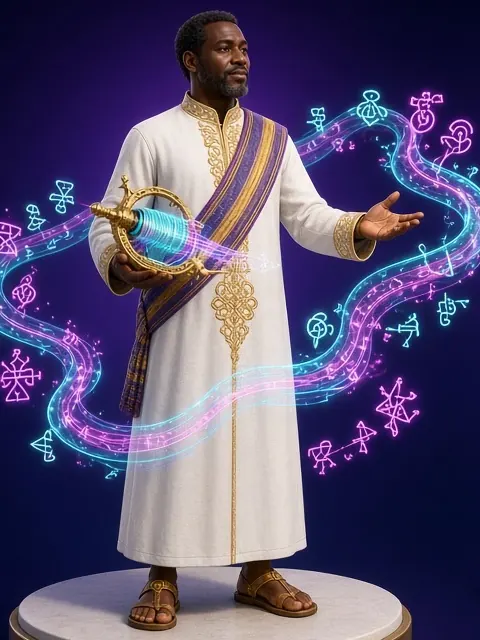
Working titleHadithi, a storyteller in his 40s with a grey-flecked beard, in a long white coat with gold embroidery and a striped sash, holding a small gold frame that unspools glowing cyan and magenta threads.

Storyteller guide

Hadithi

The voice of the stories. He opens each Heritage Wing story portal and introduces the Story room.

The name
Swahili for “story”
The look draws on
East Africa (Swahili coast)
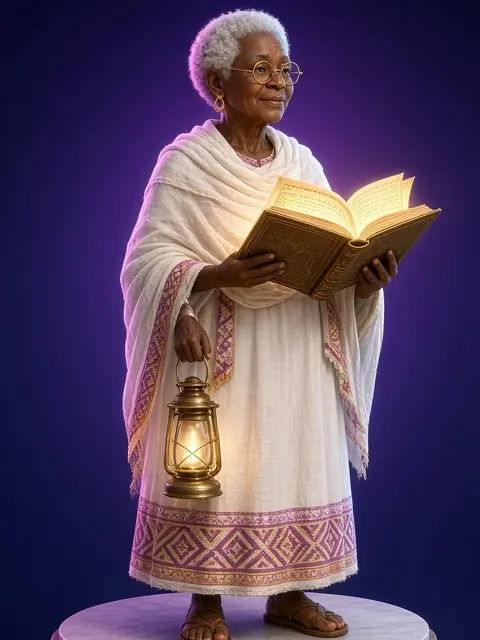
Working titleAyana, an elder archivist in her 70s with silver hair and round gold glasses, in a white handwoven dress and shawl with geometric borders, holding a glowing open book and a brass lantern.

Elder archivist

Ayana

Keeper of the Heritage Wing archive wall and the story room. She models our rule: consent, credit, compensation.

The name
Amharic/Oromo name, often glossed as “beautiful flower”
The look draws on
Horn of Africa and the Timbuktu manuscript tradition
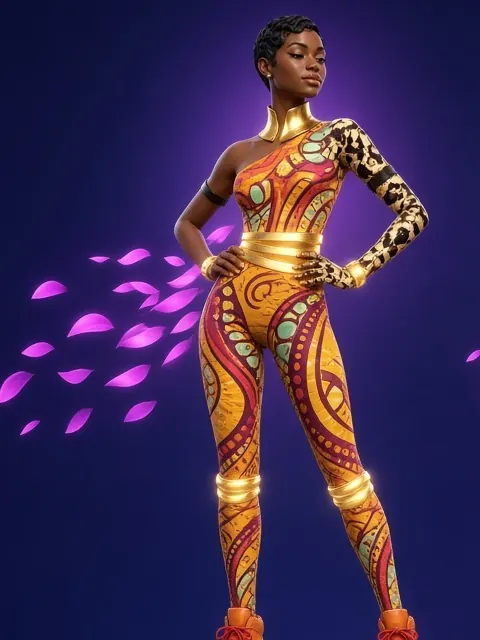
  • Working titleZuri, a woman in her 20s with short sculpted hair, in a one-shoulder wax-print bodysuit with glowing gold bands, a hide-print sleeve and a gold collar, with magenta light petals behind her.

    Zuri

    Heritage couture icon

    A direct evolution of our African Heritage – MVFW23 suits. She hosts the “Wear your heritage” photo spot.

  • Working titleLerato, a mentor in her 30s with locs and gold round glasses, a white VR headset pushed up on her head, in an indigo patterned blazer over a white turtleneck, holding a floating glass slate of cyan wireframe diagrams.

    Lerato

    Campus mentor

    The face of Metameta Campus learning: guide on the Campus Terraces and host on the Metameta Nights stage.

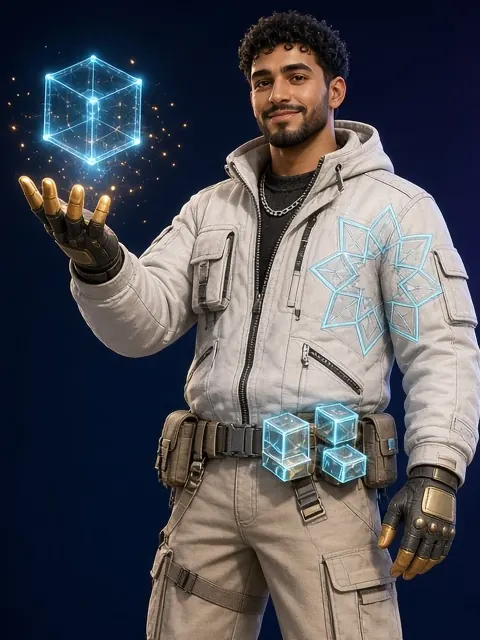
  • Working titleIdir, a builder in his late 20s with short dark curls and a trimmed beard, in an off-white techwear jacket with cyan star-tile line art, a glowing wireframe cube floating above his gloved hand.

    Idir

    Builder and creator

    The maker. He runs the Sandbox Build Island and turns a lesson into a shipped piece.

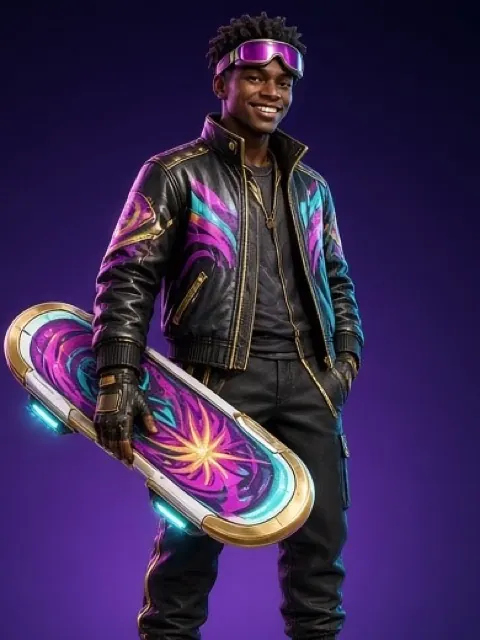
  • Working titleBaraka, a smiling young man with short twists and magenta goggles on his forehead, in a black-and-gold leather flight jacket with matatu-style airbrush art, a hoverboard under one arm.

    Baraka

    Sky pilot

    He flies the sky-matatu and rides the hoverboard between islands, and welcomes riders at the Ground Station bay.

  • Working titleIlunga, a host in her 30s with natural hair and gold ear cuffs, in a cropped geometric-pattern bomber with magenta piping and wide navy trousers, one palm open in welcome beside a small cyan hologram.

    Ilunga

    Host and welcomer

    The first face you meet at the Ground Station. She walks you through the code of conduct and hosts Metameta Nights.

Voices and stories

A character only voices a real story with the teller's consent and credit. Until then they guide, teach and invite. They don't invent history.

Build the next exhibit with us

African Culture in Immersive Space is a Metameta Campus course. Tools change. Taste doesn't.

Explore the course